
PRODUCT

WHY CHOOSE US
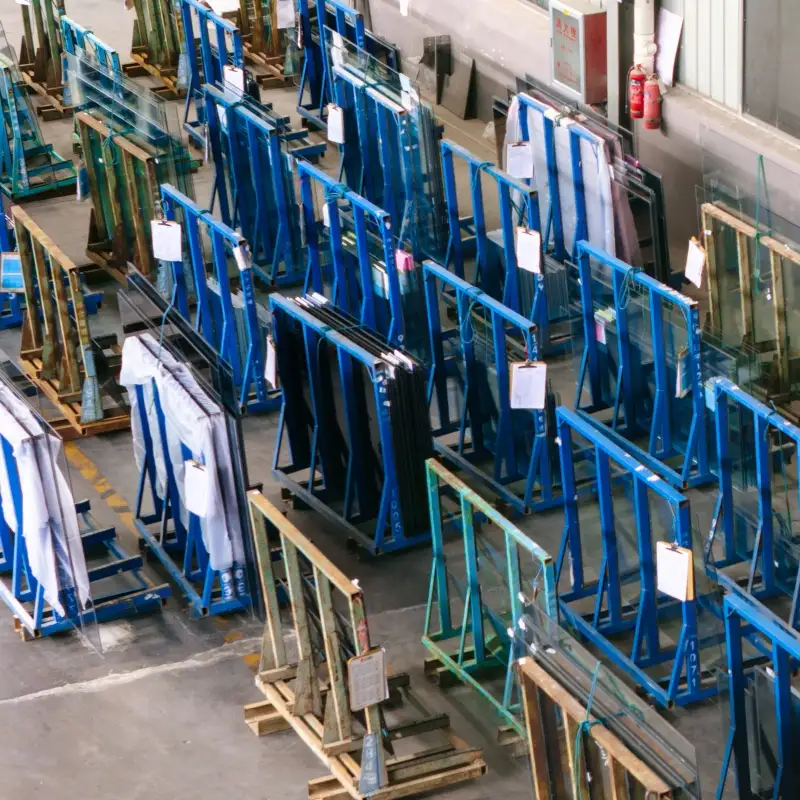
We combine specialized glass expertise, advanced manufacturing capabilities and strict quality control to deliver reliable glass solutions for demanding architectural, commercial and industrial applications
Dedicated expertise in vacuum glass technology and production..
Integrated processing capabilities supported by modern production equipment.
Strict quality control throughout processing and production.
Flexible specifications, technical support and dependable project service.
PRODUCT SPECIFICATIONS
APPLICATIONS
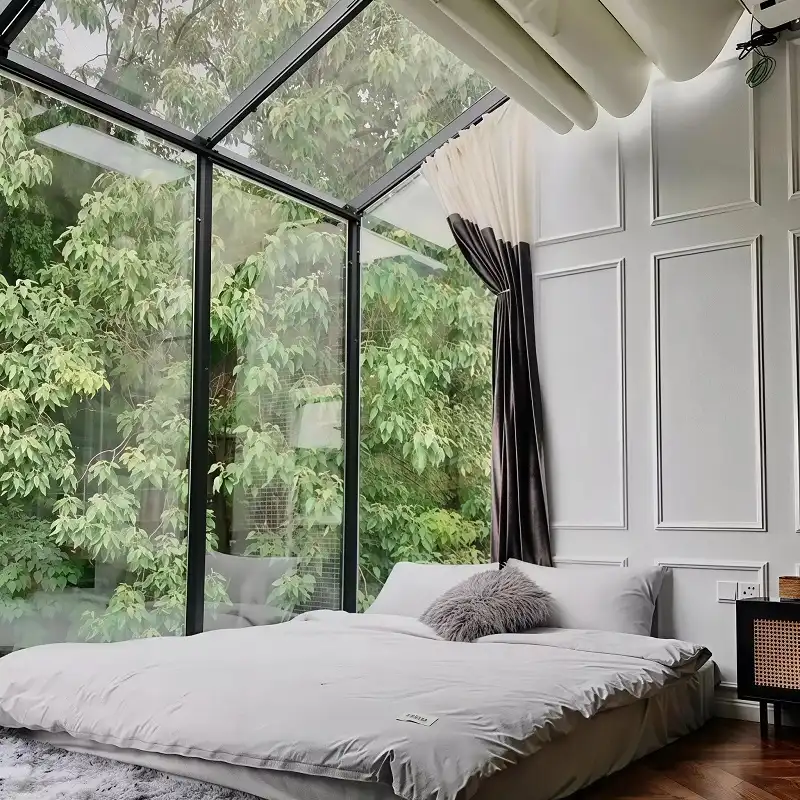
Suitable for residential window systems in energy-efficient homes and passive-house projects. The slim glass construction helps improve thermal insulation where window profile depth is limited.
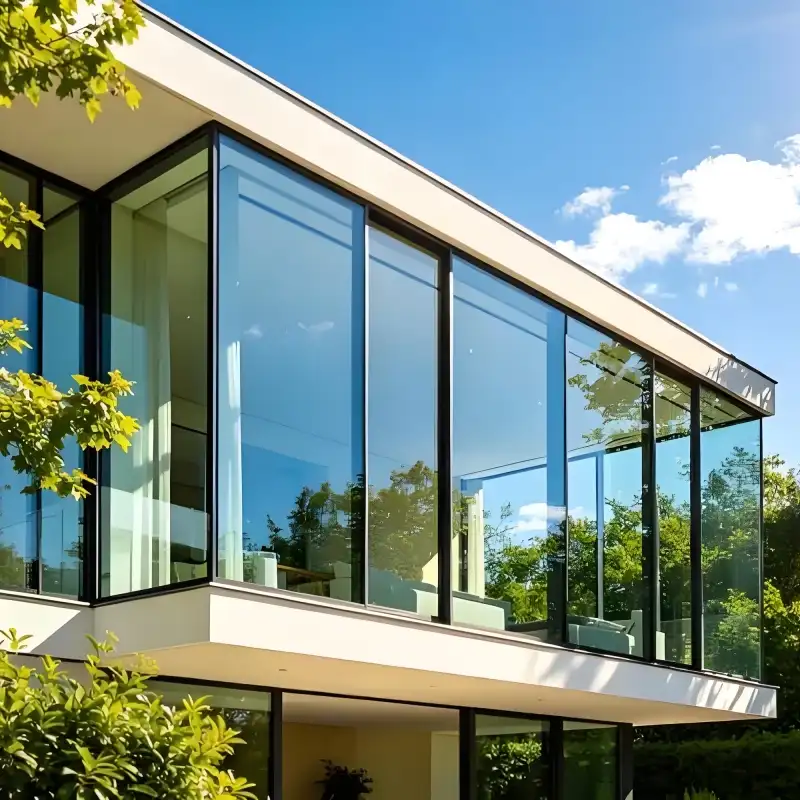
Designed for integration into office buildings, hotels and other commercial window systems where reduced heat transfer through glazing can support building energy-efficiency targets.
The slim profile may allow vacuum insulated glass panels to replace conventional insulating glass units in existing window frames, subject to glazing rebate dimensions and system compatibility. This can help improve thermal performance while retaining suitable existing frames.
With an appropriate Low-E coating and glass configuration, vacuum glass can help reduce heat loss through windows during cold weather, supporting indoor comfort and heating-energy reduction.
Vacuum insulated glass may be considered for windows exposed to traffic and other environmental noise. Acoustic performance depends on the glass composition, panel dimensions, installation and the complete window system, so project-specific testing or calculations are recommended.
OVERVIEW
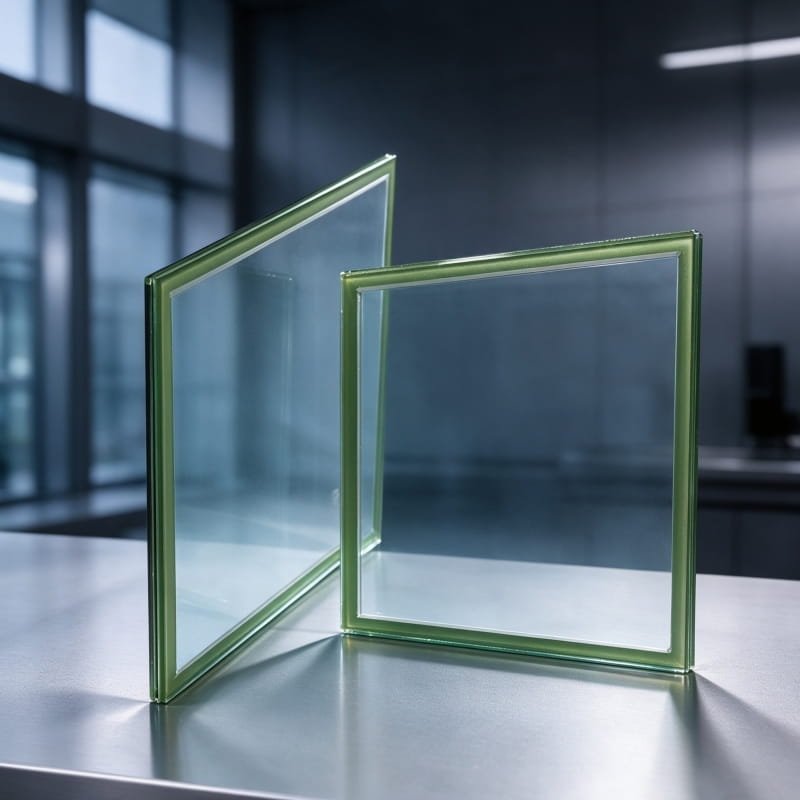
SHEN-SHILEI high-performance vacuum insulated glass window panels are designed for integration into modern window systems where thermal efficiency and limited glazing thickness are key considerations. The vacuum cavity reduces heat transfer through the glass, while optional Low-E coatings further improve thermal performance.
Available with different glass substrates and composite configurations, these panels can be tailored to project-specific requirements for thermal insulation, safety and dimensions. They are suitable for energy-efficient residential and commercial windows, as well as selected existing-building renovation projects. SHEN-SHILEI provides customized manufacturing and technical support to help window manufacturers and project teams select the appropriate glazing configuration.
DETAILS
High-performance vacuum insulated glass(VIG) panels are engineered glass units designed for integration into a wide range of window, door and curtain wall systems. At the core of each unit is a high-vacuum cavity that replaces the gas-filled cavity used in conventional insulating glass units (IGUs). By significantly reducing gas conduction and suppressing convection within the cavity, vacuum glass provides high thermal insulation in a slim profile.
Depending on project requirements, the panels can be configured with different Low-E coatings, glass substrates and composite constructions. This allows improved thermal performance within a comparable installation depth, making them suitable for both energy-efficient new buildings and the renovation of existing buildings.
SHEN-SHILEI supports project-specific manufacturing based on drawings, performance targets and dimensional requirements. Thermal calculations, third-party test reports and technical selection assistance can also be provided to help window manufacturers, curtain wall contractors and project teams meet their specified energy-efficiency targets.
The vacuum pressure inside the cavity is ≤ 0.1 Pa, substantially suppressing gas conduction and eliminating cavity convection as a significant heat-transfer mechanism. Combined with Low-E coatings that control radiative heat transfer, the system can achieve a center-of-glass U-value as low as 0.4 W/(m²·K).
Under comparable conditions, this can provide approximately two to three times the thermal insulation performance of conventional argon-filled insulating glass. The actual performance depends on the glass configuration and test conditions. Vacuum glass can support projects targeting demanding energy-efficiency standards, including near-zero-energy buildings and passive buildings.
For comparable thermal performance, the overall thickness of vacuum glass can be approximately one-sixth that of a conventional triple-glazed, double-cavity insulating glass unit, depending on the configurations being compared. Its slim construction can reduce the glazing depth and, in suitable applications, the load imposed on window frames.
This makes vacuum glass worth considering for slim-frame systems and renovation projects where the available glazing rebate limits the thickness of the replacement unit.
Available substrate options include float glass, fully tempered glass, heat-strengthened glass and laminated glass. These options allow the glazing specification to be adapted to project requirements for safety, wind-load resistance and post-breakage performance.
The appropriate substrate depends on the application, glazing dimensions, support conditions, applicable safety regulations and project specifications.
The slim profile of vacuum glass may allow it to fit within the glazing rebates of existing window systems, depending on the dimensions and condition of the original frames. Where compatibility has been confirmed, the glass can be replaced without removing the existing window frames, potentially reducing construction work and renovation costs.
This approach is particularly relevant to energy-efficiency upgrades in existing public buildings and selected historic buildings where retaining the original frames is desirable.
SHEN-SHILEI can customize coating selection, glass composition and panel dimensions according to project requirements for thermal insulation, sound reduction and optical performance.
Corresponding performance data and technical documentation can be provided to support specification development, product selection and project evaluation.
Note: The thermal performance figures below refer to the center of the glass and exclude the effects of window frames, spacer systems and other edge-related thermal bridges. Whole-window U-values must be calculated using the frame material, window dimensions, glazing configuration and other relevant design parameters. SHEN-SHILEI can assist with project-specific calculations.
| Parameter | Description | Typical Specification |
|---|---|---|
| Glass structure | Basic vacuum glazing construction | 5 mm glass + vacuum cavity + 5 mm glass |
| Overall thickness | Total thickness of the glass panel | Approximately 10.3 mm; customizable |
| Available dimensions | Panel length × width | Minimum: 200 × 300 mm; maximum: 2,400 × 3,600 mm. Larger sizes may be assessed on request |
| Center-of-glass U-value | Thermal transmittance at the center of the glass | As low as 0.4 W/(m²·K) with a single Low-E coating, depending on configuration and test conditions |
| Visible light transmittance | Light transmission through the glazing | Approximately 70–85%, depending on coating and substrate |
| Glass substrate options | Base glass materials | Float, fully tempered, heat-strengthened and laminated glass |
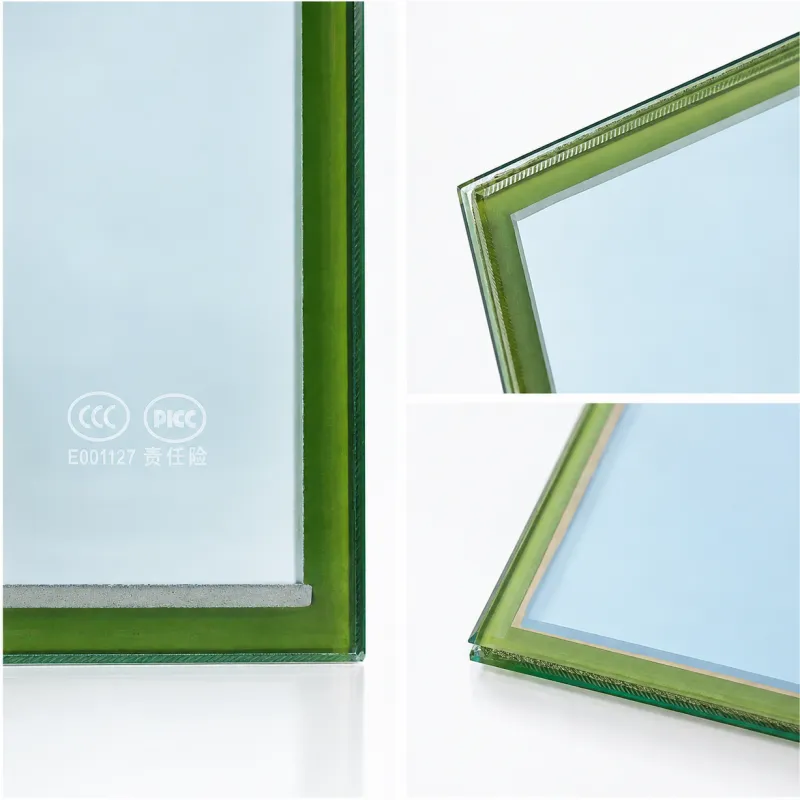
| Edge-sealing system | Sealing technology | Inorganic glass-frit brazed sealing using a one-step process, without an evacuation port |
| Initial cavity vacuum | Initial vacuum pressure | ≤ 0.1 Pa |
| Design service life | Intended service-life target | ≥ 25 years, subject to product specifications and service conditions |
Different Low-E coating options are available to accommodate regional climates and project-specific energy-efficiency priorities. In a vacuum glass system, Low-E coatings work alongside the vacuum cavity to reduce heat transfer. Because gas conduction and convection are substantially suppressed, radiative heat transfer accounts for a larger share of the remaining heat transfer, making coating selection particularly important.
Custom processing options include shaped cutting, drilling and edge finishing. Special dimensions and panel shapes can be manufactured according to project drawings, subject to feasibility assessment and the structural limitations of the selected configuration.
Suitable for selected casement windows, sliding windows and lift-and-slide doors in energy-efficient residential buildings and passive-house projects. The appropriate configuration can improve thermal insulation and may contribute to acoustic performance when designed as part of a complete window system.
Can be integrated into framed curtain walls, unitized curtain wall systems and commercial window assemblies for offices, hotels and public buildings. The glazing configuration should be selected to meet the project’s thermal, structural, optical and safety requirements.
Vacuum insulated glass window panels can help reduce heat transfer through the building envelope and support demanding energy-performance targets. Its contribution to whole-building energy performance depends on the complete envelope design, climate, orientation, HVAC system and operating conditions. Projects seeking LEED, BREEAM or DGNB certification should evaluate the glazing against the relevant project criteria.
Where dimensions and frame conditions permit, slim vacuum insulated glass window panels can replace existing insulating glass units while retaining the original frames. This can be useful for public-building renovation projects and selected historic buildings where frame replacement is difficult or undesirable.
SHEN-SHILEI uses its independently developed one-step vacuum manufacturing technology. Within a sealed vacuum chamber, the process integrates glass alignment and assembly, edge sealing, high-temperature degassing at approximately 350°C, evacuation and final sealing. The process is completed without intermediate exposure to ambient air.
Compared with conventional two-step processes that use a separate evacuation port, this approach eliminates the port as a potential sealing weak point and avoids the associated visible feature. It is designed to achieve a high initial cavity vacuum and improve production consistency, supporting long-term vacuum integrity.
The vacuum insulated glass window panels use inorganic glass-frit brazed edge sealing, designed to provide weather resistance and gas tightness without relying on conventional organic sealants as the primary vacuum seal.
A high-efficiency alloy getter is incorporated inside the cavity to absorb residual gases released by internal materials during service. This helps maintain the vacuum over time. The stated design service-life target is 25 years or more, subject to the product specification, installation conditions and service environment.
Before dispatch, each panel undergoes inspection for appearance, dimensions, vacuum condition and sealing integrity. Type testing is also conducted periodically for properties such as thermal transmittance, acoustic performance, resistance to environmental cycling and wind-load performance.
Third-party test reports can be provided where available for the relevant product configuration. Vacuum insulated glass window panels specifications and test documentation should be reviewed against the applicable requirements of GB/T 38586-2020 (Vacuum Glass), EN 1279, EN ISO 10456 and other project-specific standards. Applicability depends on the product type and the scope of each standard.
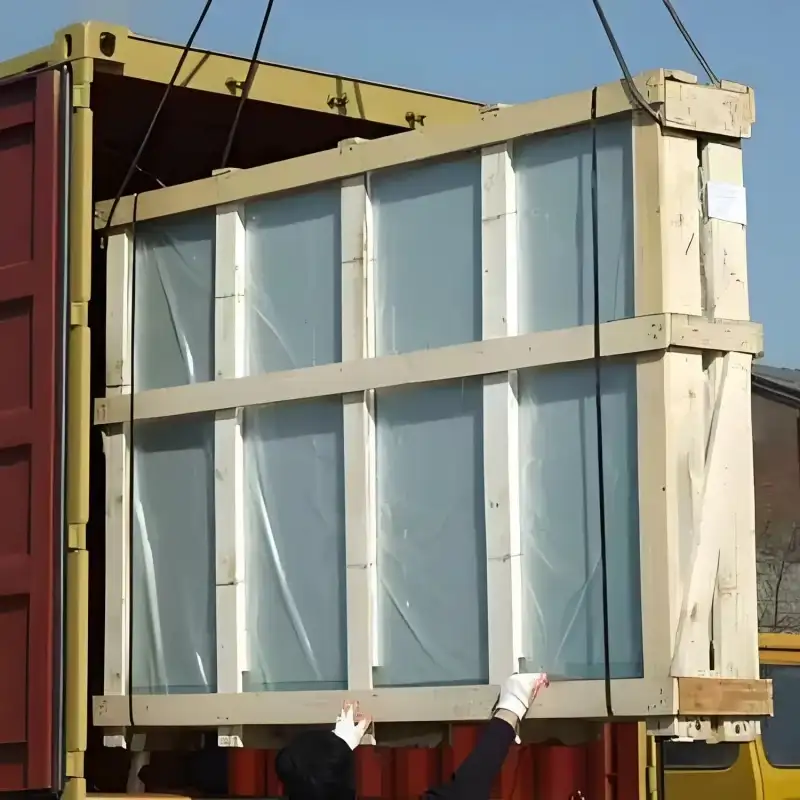
Vacuum insulated glass window panels are packed in reinforced wooden crates designed for export shipment, with protective cushioning selected for the glass configuration and transport requirements. Staged deliveries can be arranged to align with project schedules and installation milestones.
The choice depends on the project’s climate, façade orientation, daylight requirements and energy-performance targets.
SHEN-SHILEI’s technical team can assist with coating selection based on the project’s conditions and performance requirements.
The standard size range is approximately 200 × 300 mm to 2,400 × 3,600 mm. Oversized panels and non-standard shapes can be assessed individually, taking into account the glass structure, safety requirements and manufacturing feasibility.
In suitable applications, yes. The slim profile of vacuum insulated glass window panels may allow it to fit within the existing glazing rebate, making it possible to replace the glass while retaining the original frames.
Compatibility must be confirmed by checking the available rebate depth, panel dimensions, frame condition, glazing method, safety requirements and the weight of the replacement unit. Not every existing window system can accommodate a direct replacement.
Third-party test reports for thermal performance, acoustic properties and environmental durability can be provided where available for the relevant product configuration. Compliance with specific Chinese, European, US or other regional standards must be confirmed against the applicable test reports, product specifications and project requirements.
For standard batch orders, the indicative lead time is approximately 2–4 weeks. Customized orders require an individual assessment based on dimensions, configuration, quantity and production requirements.
To request a project-specific configuration and quotation, please provide the project type, panel dimensions, required quantity, target performance values and expected delivery date. Drawings and applicable technical specifications are also helpful for evaluating feasibility and selecting the appropriate glass structure.
Contact SHEN-SHILEI to discuss vacuum insulated glass window panels for your window, door or curtain wall project.
FAQ
Find quick answers regarding glass customization, production lead time, technical parameters, ordering and export cooperation.
To prepare an accurate quotation, we recommend providing as much of the following information as possible:
If drawings, specifications, BOQ, or project documents are available, customers can also send them to us. Our technical team can review the requirements and recommend a suitable glass configuration before quotation.
Yes. We provide customized glass processing based on customer drawings, specifications, and application requirements.
Depending on the product, customization may include glass dimensions, thickness, glass composition, Low-E coating, spacer configuration, PVB or other interlayers, edge processing, holes, notches, corners, surface treatment, and other fabrication requirements.
For project-based orders, we recommend sending the original drawings or technical specifications before production. Our team can review the dimensions, glass configuration, processing requirements, and potential production issues to reduce the risk of errors before manufacturing.
For repeated orders, we can also maintain the approved specifications and production requirements to help ensure consistency between batches.
Both vacuum glass and insulated glass are designed to improve thermal insulation, but their structures and performance characteristics are different.
Insulated glass consists of two or more panes separated by a spacer and sealed around the perimeter, with the cavity typically filled with air or an insulating gas such as argon.
Vacuum glass uses a highly evacuated space between glass panes. Because the vacuum greatly reduces gas conduction and convection, vacuum glass can achieve high thermal insulation performance with a relatively slim overall thickness.
The appropriate solution depends on the project requirements. Insulated glass is widely used in conventional energy-efficient windows and curtain walls, while vacuum glass can be particularly useful where high thermal performance, slim thickness, retrofit compatibility, or limited glazing space is important.
For a specific project, we recommend evaluating the required U-value, window system, climate, glass size, solar-control requirements, and installation conditions before selecting the configuration.
The applicable standards and documentation depend on the product, destination market, and project requirements.
Before production, customers can specify the required standards or provide the project specification. We can then confirm the applicable technical requirements and documentation.
Depending on the product and project, documentation may include product specifications, inspection records, test reports, certificates, material information, and other quality documents.
For export projects, we recommend confirming the required standards during the quotation stage rather than after production. This allows both sides to verify whether the proposed glass configuration meets the technical requirements of the destination market.
Quality control begins before production and continues throughout the manufacturing process.
Depending on the product, quality control may cover raw material inspection, dimensional accuracy, glass appearance, edge quality, processing accuracy, tempering performance, coating condition, insulating glass sealing, laminated glass bonding, and final product inspection.
For customized and project orders, production specifications are confirmed before manufacturing. Critical dimensions and processing requirements are checked during production, followed by final inspection before packing.
We also recommend that customers confirm critical acceptance criteria in advance, especially for large architectural projects. This creates a clear quality standard for both sides and helps ensure consistent production and inspection.
Our MOQ depends on the glass type, dimensions, processing requirements, production setup, and order structure.
Standard-size products and larger project orders may have different MOQ requirements from highly customized or small-batch products.
For project orders, we recommend sending the glass schedule or estimated quantity first. We can evaluate the order based on the actual specifications rather than applying a single MOQ to all products.
For new customers or sample development, we can also discuss a suitable trial quantity depending on the product and processing requirements.
Lead time depends on the product, quantity, specifications, processing complexity, raw material availability, and current production schedule.
Standard products with confirmed specifications generally have a shorter production cycle, while customized glass, large project orders, special processing, or products requiring specific materials may require additional time.
Before order confirmation, we provide an estimated production schedule based on the actual order requirements. For project orders, we recommend confirming the required delivery date during the quotation stage so that production capacity and shipping arrangements can be planned in advance.
Glass packaging is designed according to the product type, glass dimensions, weight, transportation method, and destination.
For export shipments, glass is normally secured in suitable transport crates or cases with protective materials to reduce movement, impact, scratching, and other transportation risks.
For large or heavy glass units, packaging and loading arrangements are planned according to the actual dimensions and weight of the shipment.
Before shipment, the packing condition and loading arrangement are checked to help ensure that the glass is properly secured during transportation.
For long-distance sea shipments, we also recommend confirming the packaging and loading requirements according to the destination port and transportation conditions.
Yes. Sample production can be discussed for many customized glass products.
For project orders, samples can be used to confirm important aspects such as appearance, color, glass configuration, thickness, processing details, and overall workmanship before mass production.
If the project requires laboratory testing or third-party certification, the required test method and acceptance criteria should be confirmed before sample production.
Once the sample and technical specifications are approved, the approved configuration can be used as the reference for subsequent bulk production.
Yes. We can review the project requirements and recommend a suitable glass configuration based on the intended application.
Customers do not necessarily need to determine the complete glass structure before contacting us. You can provide the application, glass dimensions, required performance, local climate, building or product requirements, and any available drawings or specifications.
Based on these requirements, we can evaluate suitable options such as vacuum glass, insulated glass, laminated glass, tempered glass, or combinations of different glass types.
For example, if the priority is thermal insulation with limited glazing thickness, vacuum glass may be worth evaluating. If the project requires thermal insulation together with solar control or acoustic performance, an appropriate insulated glass configuration may be considered. Where safety or security is a key requirement, laminated or specially designed glass constructions may be more appropriate.
The final specification should always be determined according to the applicable project standards, system requirements, testing requirements, and actual installation conditions.
Send the dimensions, quantity, application and destination for a project review.