
PRODUCT

WHY CHOOSE US
We combine specialized glass expertise, advanced manufacturing capabilities and strict quality control to deliver reliable glass solutions for demanding architectural, commercial and industrial applications
Dedicated expertise in vacuum glass technology and production..
Integrated processing capabilities supported by modern production equipment.
Strict quality control throughout processing and production.
Flexible specifications, technical support and dependable project service.
PRODUCT SPECIFICATIONS
APPLICATIONS
OVERVIEW
DETAILS
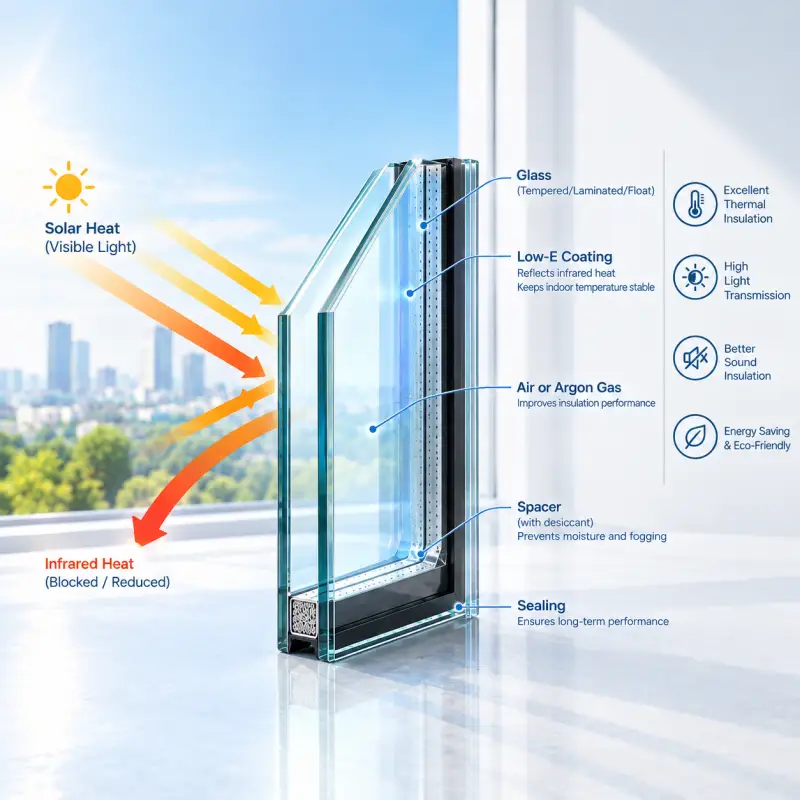
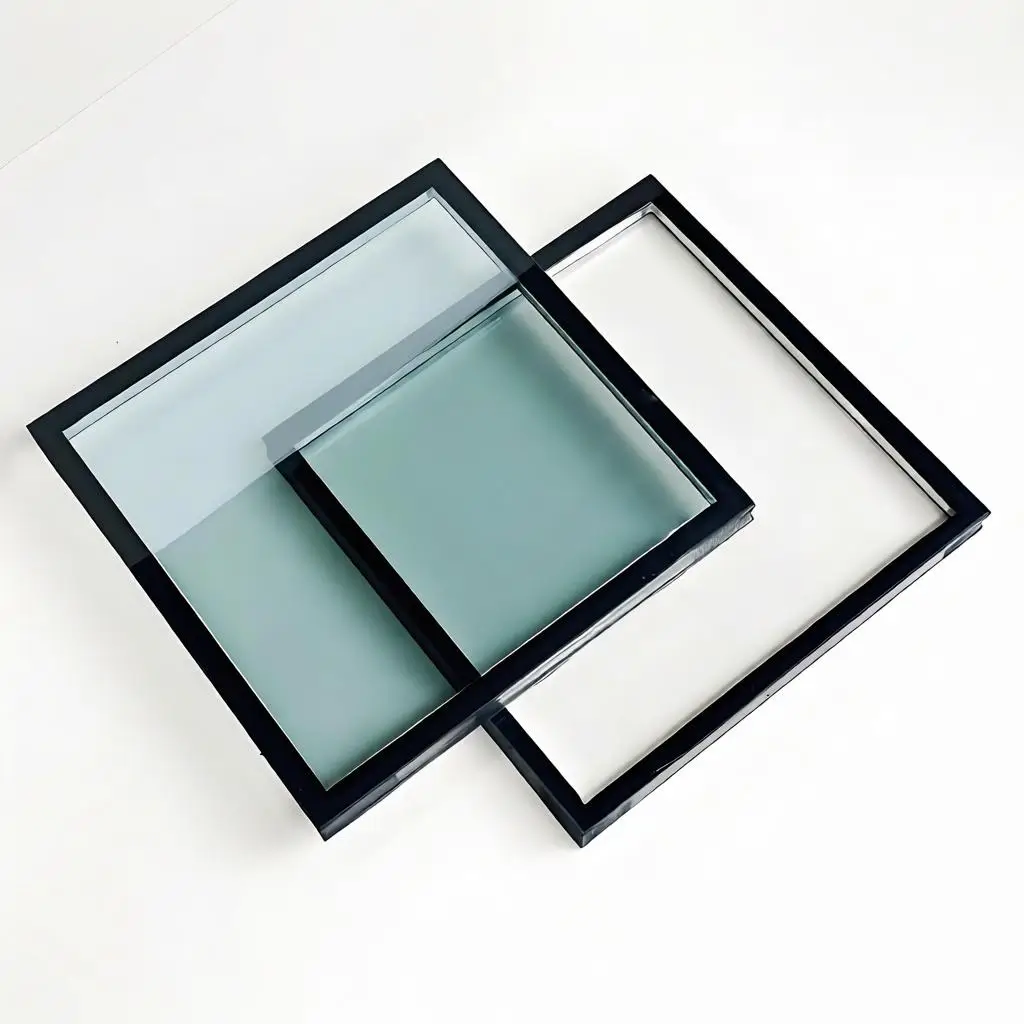
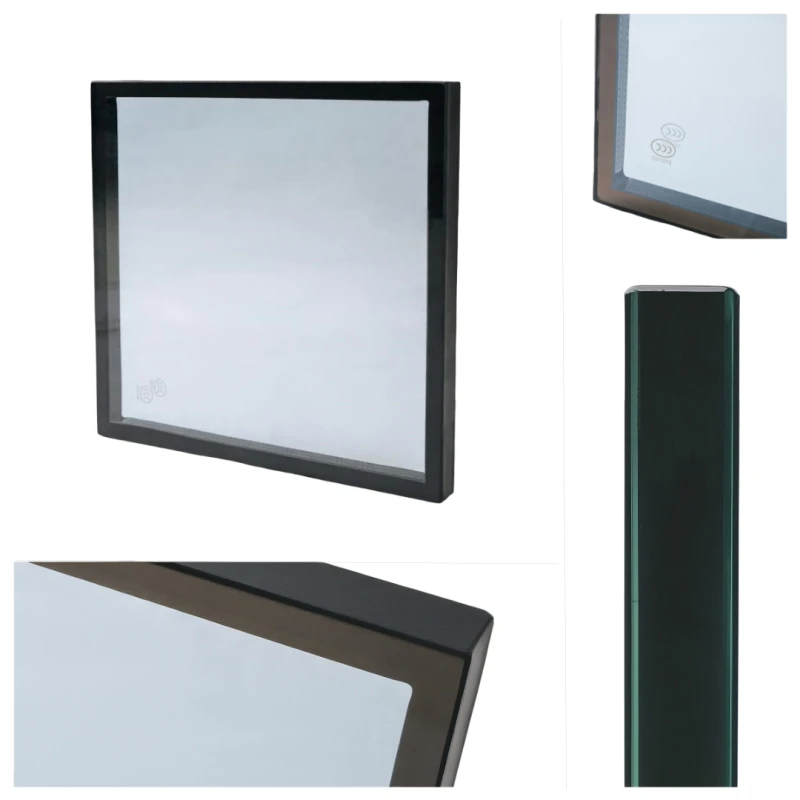
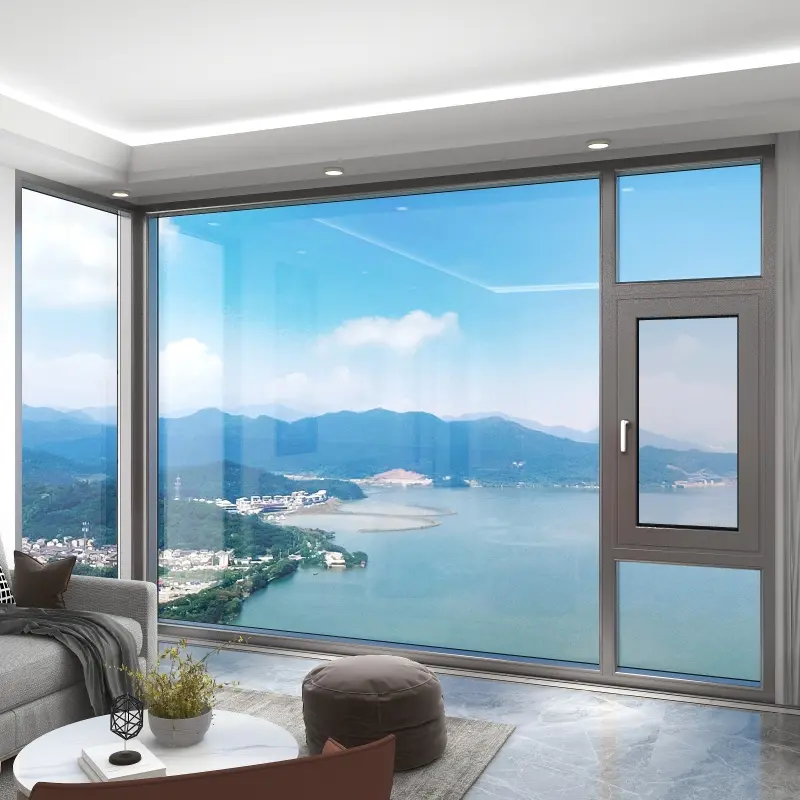
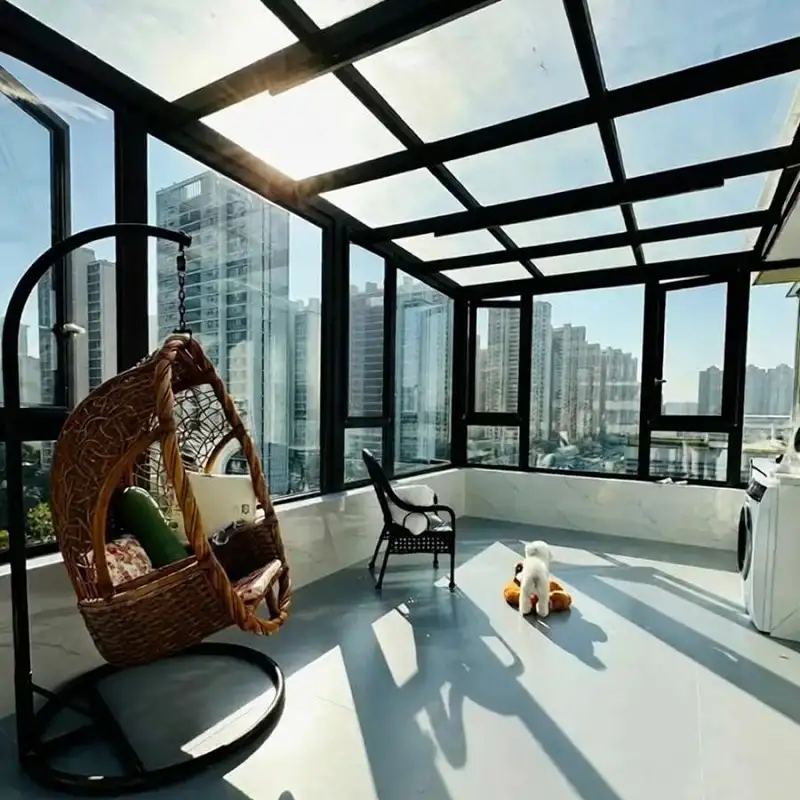
Low-E insulated glass is a high-performance architectural glass product combining low-emissivity coating technology with an insulated glass unit structure. By applying low-emissivity coating to glass surfaces together with a sealed insulating cavity, it effectively cuts thermal radiation and heat conduction, delivering superior thermal retention, heat insulation and energy efficiency for building windows, doors and curtain walls.
The Low-E coating selectively manages solar radiation across different wavelengths. It maintains ample natural daylight while blocking unwanted solar heat from entering indoors. In winter, it reduces indoor heat loss through glass to the outdoors. When paired with an insulating cavity filled with air or inert gas, the assembly further lowers overall heat transfer and improves thermal performance of the building envelope.
SHEN-SHILEI supplies single silver, double silver and triple silver Low-E insulated glass tailored to local climate, energy codes, daylight requirements and glass specifications of individual construction projects. Custom options cover dimensions, thickness, tint and glass build-up.
Low-E stands for Low Emissivity. The core performance of Low-E glass comes from its specialized surface coating, which features low emissivity and strong infrared reflection.
In summer, infrared heat from sunlight easily passes through ordinary glass and warms interior spaces. Low-E coating reflects most of this thermal radiation while preserving high visible light transmission. It lets natural light in but reduces solar heat gain, easing cooling loads for air conditioning systems.
In winter, heat generated by indoor heating, lighting and human bodies radiates outward as long-wave infrared energy. The Low-E coating bounces a portion of this long-wave heat back inside to slow heat loss through the glass.
The sealed insulating cavity, filled with air or inert gas, limits conductive heat transfer and air convection between glass panes. The Low-E coating and insulated unit work in tandem to deliver balanced thermal performance for winter heat retention and summer heat rejection.
Low-E coating reduces radiative heat transfer on glass surfaces. The sealed cavity suppresses conduction and convection. Together they lower the overall U-value and upgrade thermal performance of windows and doors.
We can adjust glass thickness, cavity width and Low-E coating system to match local climate and building energy requirements for optimal insulation. All assemblies comply with ASTM E2190 insulating glass standards.
Different Low-E coating families offer distinct solar heat gain control. Solar control Low-E blocks more solar radiation, ideal for regions with strong sun exposure and building facades. High-transmittance Low-E strikes a good balance between natural daylight and passive solar heat gain in winter.
Proper selection of Low-E type and glass build-up helps designers balance daylight access, solar heat gain and building energy consumption for project-specific needs.
Low-E glass does not simply block all sunlight. Its engineered coating selectively filters light across different wavelengths.
Well-configured Low-E insulated glass maintains good visible light transmittance. It maximizes use of natural daylight indoors while cutting unnecessary solar thermal radiation, creating a comfortable interior lighting environment.
Standard glass creates noticeable heat exchange between indoors and outdoors under large seasonal temperature differences. Low-E insulated glass moderates surface heat exchange, stabilizes indoor temperature and eliminates hot/cold discomfort near window areas.
The insulated cavity also boosts acoustic performance, delivering a more pleasant indoor environment for residences, office buildings, hotels and commercial developments.
Low-E insulated glass provides higher thermal resistance, raising the interior glass surface temperature and minimizing condensation risk in cold conditions.
Note that condensation depends on indoor humidity, outdoor temperature, glass assembly, frame system and overall building air sealing. Full window system design should be considered for accurate assessment.
Based on the number of functional silver layers and performance characteristics, the main variants are single silver, double silver and triple silver Low-E glass.
Single silver Low-E uses one functional silver layer, supported by dielectric layers to achieve target optical and thermal properties. It delivers reliable general performance and flexible configurations, widely used for residential, commercial and standard window & door projects.
Double silver Low-E incorporates two silver functional layers. Compared with single silver products, it provides stronger solar heat control and lower heat transfer, suited for projects requiring advanced energy efficiency and solar shading.
Triple silver Low-E features three silver layers within a sophisticated coating stack. It achieves premium solar control while keeping high visible light transmittance, perfect for high-performance buildings, passive houses and large-scale projects with strict energy efficiency standards.
Actual performance depends on Low-E coating system, glass thickness, cavity design, fill gas and overall glass construction. Product selection should reference measured performance data for each project.
Low-E coating is commonly integrated into insulated glass units to maximize thermal performance. SHEN-SHILEI offers multiple glass build-ups to meet project needs:
For cold climate zones, we prioritize thermal retention. For hot regions with intense solar radiation, solar control Low-E coatings help cut solar heat gain. In locations with dramatic seasonal shifts, designers evaluate key metrics including U-value, SHGC and visible light transmittance to finalize glass selection.
Low-E insulated glass is widely adopted for energy-efficient building envelopes where thermal performance, daylight harvesting and solar management are core priorities.
Typical applications:
For large facade projects, Low-E glass can be combined with tempered, laminated or other functional glass to satisfy safety, acoustic and architectural design requirements.
Buildings vary widely in requirements for thermal insulation, solar control, daylight, aesthetics and safety. Off-the-shelf Low-E assemblies may not fit every project.
SHEN-SHILEI develops custom Low-E insulated glass solutions based on project location, building orientation, window dimensions, facade design and target performance metrics.
Available customizations include different Low-E coating systems, glass substrates, thicknesses, cavity widths, gas fills, glass tint and composite structures. We evaluate performance parameters for selected assemblies to help clients identify the right glass solution for their specific use case.
From glass fabrication and insulated unit production through final inspection and packaging, SHEN-SHILEI provides project-focused architectural glass manufacturing for custom applications.
Low-E insulated glass merges two core technologies: low-emissivity coating and insulated glass construction. The Low-E coating manages thermal radiation while the sealed cavity reduces heat transfer via conduction and convection.
This combination makes Low-E insulated glass a practical solution for modern energy-saving windows and facades. It helps architects, contractors and building owners balance thermal performance, daylight access, solar heat control and indoor comfort.
With flexible assembly options and custom manufacturing capabilities, SHEN-SHILEI supplies Low-E insulated glass for a broad range of architectural projects and performance requirements.
FAQ
Find quick answers regarding glass customization, production lead time, technical parameters, ordering and export cooperation.
To prepare an accurate quotation, we recommend providing as much of the following information as possible:
If drawings, specifications, BOQ, or project documents are available, customers can also send them to us. Our technical team can review the requirements and recommend a suitable glass configuration before quotation.
Yes. We provide customized glass processing based on customer drawings, specifications, and application requirements.
Depending on the product, customization may include glass dimensions, thickness, glass composition, Low-E coating, spacer configuration, PVB or other interlayers, edge processing, holes, notches, corners, surface treatment, and other fabrication requirements.
For project-based orders, we recommend sending the original drawings or technical specifications before production. Our team can review the dimensions, glass configuration, processing requirements, and potential production issues to reduce the risk of errors before manufacturing.
For repeated orders, we can also maintain the approved specifications and production requirements to help ensure consistency between batches.
Both vacuum glass and insulated glass are designed to improve thermal insulation, but their structures and performance characteristics are different.
Insulated glass consists of two or more panes separated by a spacer and sealed around the perimeter, with the cavity typically filled with air or an insulating gas such as argon.
Vacuum glass uses a highly evacuated space between glass panes. Because the vacuum greatly reduces gas conduction and convection, vacuum glass can achieve high thermal insulation performance with a relatively slim overall thickness.
The appropriate solution depends on the project requirements. Insulated glass is widely used in conventional energy-efficient windows and curtain walls, while vacuum glass can be particularly useful where high thermal performance, slim thickness, retrofit compatibility, or limited glazing space is important.
For a specific project, we recommend evaluating the required U-value, window system, climate, glass size, solar-control requirements, and installation conditions before selecting the configuration.
The applicable standards and documentation depend on the product, destination market, and project requirements.
Before production, customers can specify the required standards or provide the project specification. We can then confirm the applicable technical requirements and documentation.
Depending on the product and project, documentation may include product specifications, inspection records, test reports, certificates, material information, and other quality documents.
For export projects, we recommend confirming the required standards during the quotation stage rather than after production. This allows both sides to verify whether the proposed glass configuration meets the technical requirements of the destination market.
Quality control begins before production and continues throughout the manufacturing process.
Depending on the product, quality control may cover raw material inspection, dimensional accuracy, glass appearance, edge quality, processing accuracy, tempering performance, coating condition, insulating glass sealing, laminated glass bonding, and final product inspection.
For customized and project orders, production specifications are confirmed before manufacturing. Critical dimensions and processing requirements are checked during production, followed by final inspection before packing.
We also recommend that customers confirm critical acceptance criteria in advance, especially for large architectural projects. This creates a clear quality standard for both sides and helps ensure consistent production and inspection.
Our MOQ depends on the glass type, dimensions, processing requirements, production setup, and order structure.
Standard-size products and larger project orders may have different MOQ requirements from highly customized or small-batch products.
For project orders, we recommend sending the glass schedule or estimated quantity first. We can evaluate the order based on the actual specifications rather than applying a single MOQ to all products.
For new customers or sample development, we can also discuss a suitable trial quantity depending on the product and processing requirements.
Lead time depends on the product, quantity, specifications, processing complexity, raw material availability, and current production schedule.
Standard products with confirmed specifications generally have a shorter production cycle, while customized glass, large project orders, special processing, or products requiring specific materials may require additional time.
Before order confirmation, we provide an estimated production schedule based on the actual order requirements. For project orders, we recommend confirming the required delivery date during the quotation stage so that production capacity and shipping arrangements can be planned in advance.
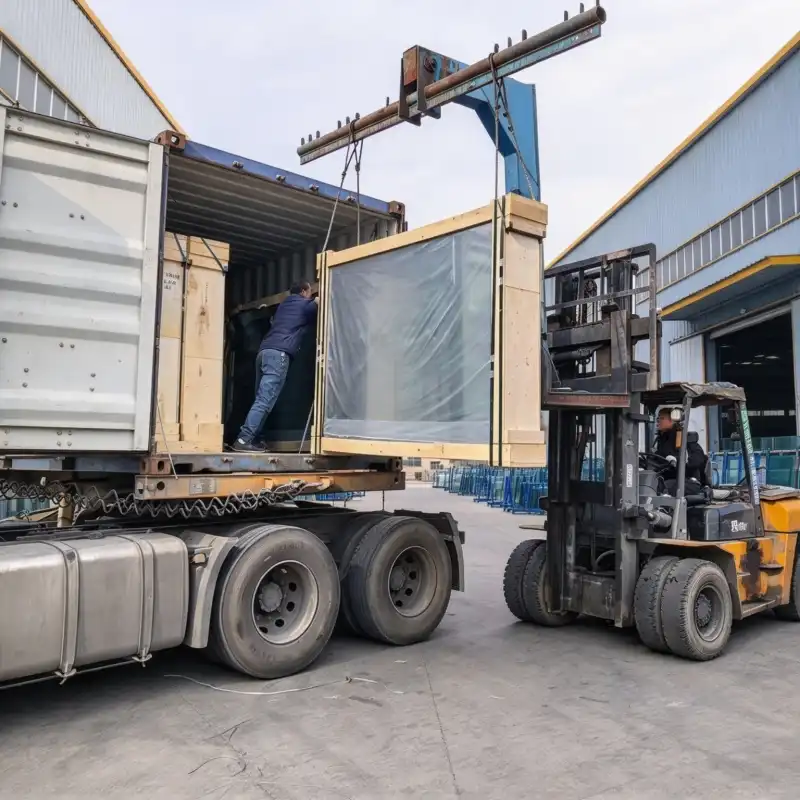
Glass packaging is designed according to the product type, glass dimensions, weight, transportation method, and destination.
For export shipments, glass is normally secured in suitable transport crates or cases with protective materials to reduce movement, impact, scratching, and other transportation risks.
For large or heavy glass units, packaging and loading arrangements are planned according to the actual dimensions and weight of the shipment.
Before shipment, the packing condition and loading arrangement are checked to help ensure that the glass is properly secured during transportation.
For long-distance sea shipments, we also recommend confirming the packaging and loading requirements according to the destination port and transportation conditions.
Yes. Sample production can be discussed for many customized glass products.
For project orders, samples can be used to confirm important aspects such as appearance, color, glass configuration, thickness, processing details, and overall workmanship before mass production.
If the project requires laboratory testing or third-party certification, the required test method and acceptance criteria should be confirmed before sample production.
Once the sample and technical specifications are approved, the approved configuration can be used as the reference for subsequent bulk production.
Yes. We can review the project requirements and recommend a suitable glass configuration based on the intended application.
Customers do not necessarily need to determine the complete glass structure before contacting us. You can provide the application, glass dimensions, required performance, local climate, building or product requirements, and any available drawings or specifications.
Based on these requirements, we can evaluate suitable options such as vacuum glass, insulated glass, laminated glass, tempered glass, or combinations of different glass types.
For example, if the priority is thermal insulation with limited glazing thickness, vacuum glass may be worth evaluating. If the project requires thermal insulation together with solar control or acoustic performance, an appropriate insulated glass configuration may be considered. Where safety or security is a key requirement, laminated or specially designed glass constructions may be more appropriate.
The final specification should always be determined according to the applicable project standards, system requirements, testing requirements, and actual installation conditions.
Send the dimensions, quantity, application and destination for a project review.