
PRODUCT

WHY CHOOSE US
We combine specialized glass expertise, advanced manufacturing capabilities and strict quality control to deliver reliable glass solutions for demanding architectural, commercial and industrial applications
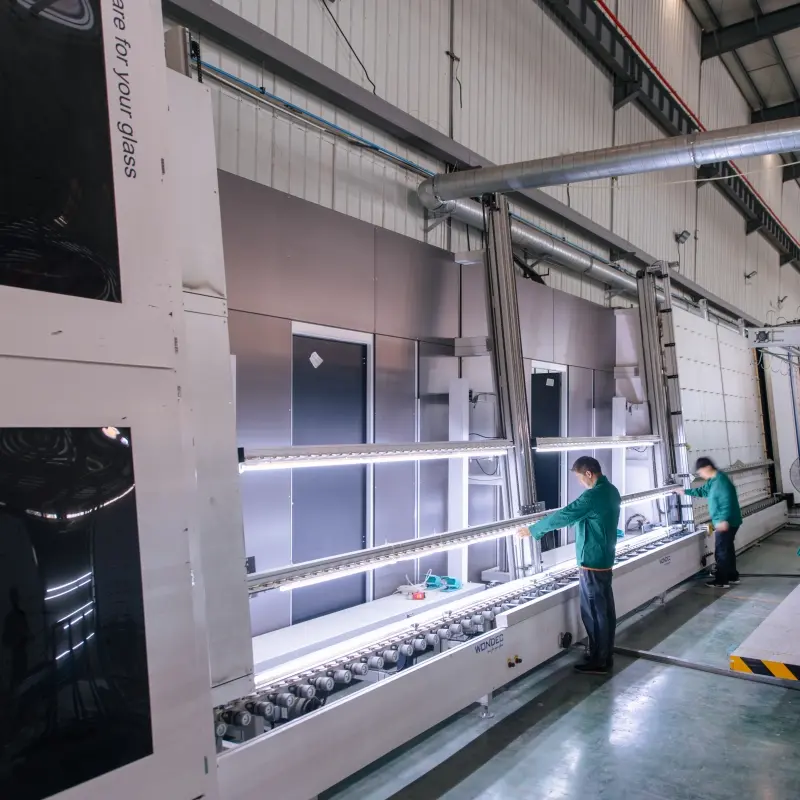
Dedicated expertise in vacuum glass technology and production..
Integrated processing capabilities supported by modern production equipment.
Strict quality control throughout processing and production.
Flexible specifications, technical support and dependable project service.
PRODUCT SPECIFICATIONS
APPLICATIONS
OVERVIEW
Vacuum Insulated Composite Glass is a multi-layer glazing solution that combines vacuum glass technology with a gas-filled insulating glass structure. The vacuum cavity significantly reduces heat transfer through gas conduction and convection, while the additional insulating cavity provides further thermal resistance.
Depending on project requirements, the glass can be configured with tempered or laminated glass substrates and optional Low-E coatings to balance thermal performance, acoustic insulation and safety. Different glass thicknesses and cavity configurations are available to suit a range of architectural applications.
SHEN-SHILEI provides Vacuum Insulated Composite Glass for energy-efficient buildings, curtain walls, windows and renovation projects where improved insulation and long-term performance are important.
DETAILS
Vacuum Insulated Composite Glass is a high-performance architectural glazing product that combines a vacuum insulating cavity with a gas-filled insulating glass cavity and safety glass panes. As a composite glazing solution derived from vacuum glass technology, it is designed to overcome the thermal performance limitations of conventional gas-filled insulating glass while improving overall mechanical strength and adaptability to different environmental conditions.
By incorporating a high-vacuum cavity, the product significantly reduces heat transfer through gas conduction and convection. Its composite construction can also combine different glass substrates, gas-filled cavities and functional coatings to balance thermal insulation, sound reduction, safety and weather resistance. These characteristics make it suitable for low-energy buildings, energy-efficiency upgrades to existing buildings and applications with demanding environmental requirements.
Unlike conventional insulating glass, which relies primarily on an air or inert-gas cavity, Vacuum Insulated Composite Glass incorporates at least one cavity with a pressure below 0.1 Pa. The resulting near-vacuum environment substantially limits gas-related heat transfer. Depending on project requirements, the product can be configured with different numbers of cavities, glass types and surface coatings to meet varying building energy-performance targets.
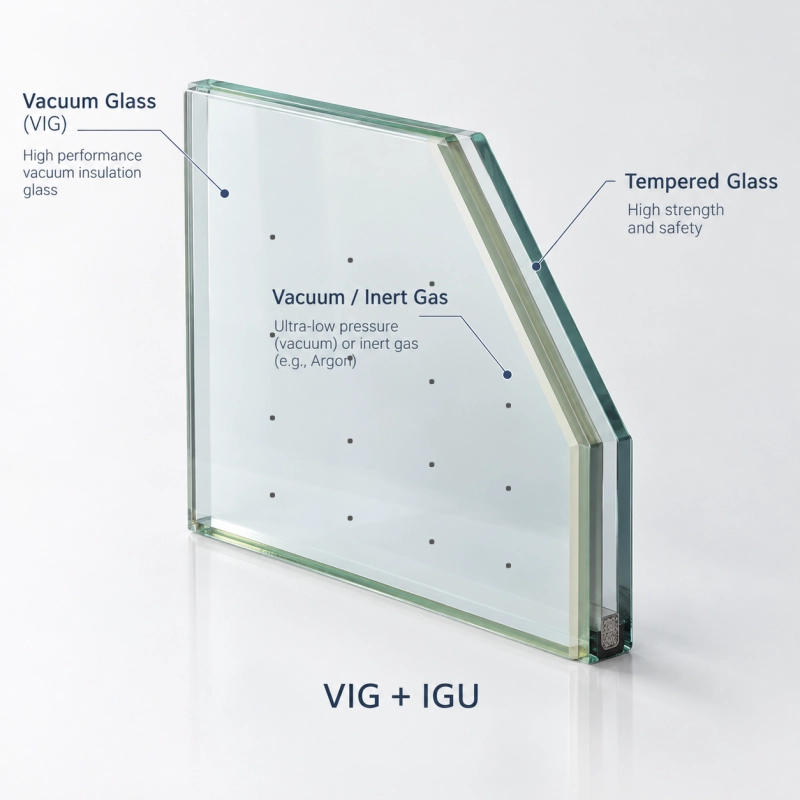
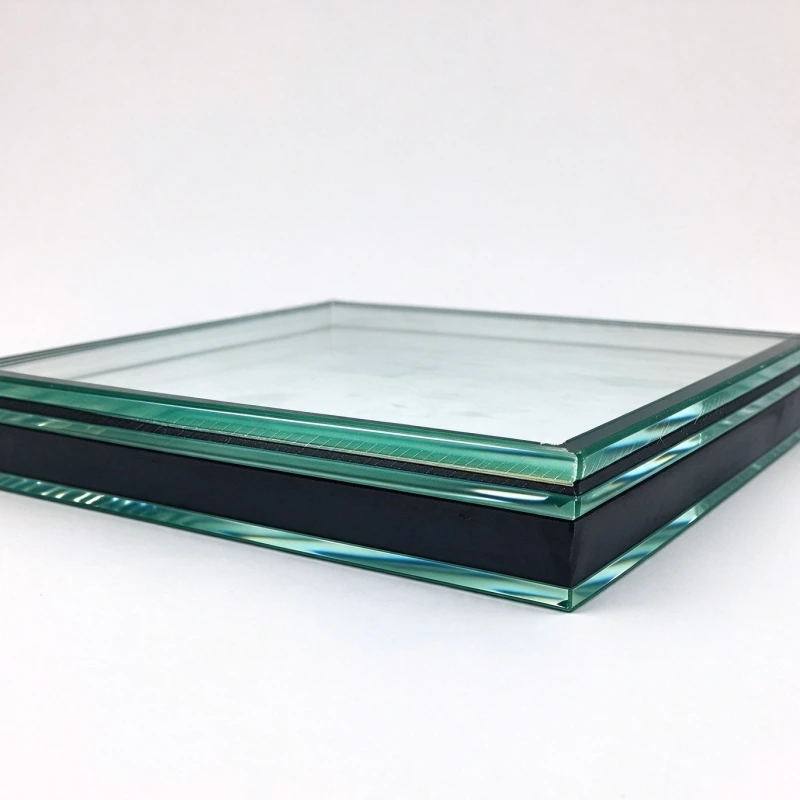
Vacuum Insulated Composite Glass uses a multi-layer glazing structure. A typical three-pane, two-cavity configuration consists of an outer glass pane, a vacuum cavity, a middle glass pane, a gas-filled insulating cavity and an inner glass pane. The assembly is sealed around its perimeter.
The glass panes may be made from float glass, tempered glass or laminated glass, depending on the safety and performance requirements of the project.
The vacuum cavity is typically only 0.1–0.2 mm thick. A distributed array of microscopic support pillars maintains the cavity spacing and helps the glass withstand atmospheric pressure without collapsing. These pillars are commonly made from stainless steel or titanium alloy, with a diameter of approximately 0.3 mm. Their small size and regular distribution help minimize their visual impact.
The insulating cavity can be filled with dry air or argon to provide additional thermal resistance. The two cavity types use different sealing approaches: an inorganic glass-based edge seal is used for the vacuum cavity to maintain vacuum integrity, while a dual-seal system using organic sealants is typically used for the gas-filled cavity to provide structural and environmental protection.
For projects requiring improved thermal performance, a low-emissivity (Low-E) coating can be applied to an appropriate surface facing the vacuum cavity. This optional configuration reduces radiative heat transfer without fundamentally changing the overall composite structure.
Heat passes through glazing by conduction, convection and radiation. The principal advantage of Vacuum Insulated Composite Glass is its ability to greatly reduce gas-related conduction and convection while allowing radiative heat transfer to be controlled through suitable coating configurations.
For reference, China’s national standard GB/T 38586-2020 for Vacuum Insulating Glass specifies requirements and test methods for vacuum insulating glass.
In conventional gas-filled insulating glass, even when the cavity is filled with argon or another inert gas, heat can still transfer through the gas, and temperature differences can drive convective movement within the cavity. These mechanisms contribute to the overall heat transfer through the glazing system.
Inside the vacuum cavity, the number of gas molecules is extremely low, so gas conduction and convection are greatly suppressed. Heat transfer is then primarily associated with radiation and the small amount of solid conduction through the support pillars and edge-seal system. This can substantially reduce the glazing system’s thermal transmittance.
The additional gas-filled cavity provides another layer of thermal resistance and contributes to the performance of the composite assembly. When combined with an appropriate Low-E coating, radiative heat transfer can be reduced further. Depending on the specific construction and test conditions, the overall thermal performance can significantly exceed that of conventional triple insulating glass.
Thermal insulation is a key performance characteristic of Vacuum Insulated Composite Glass. According to the performance figures cited for high-performance configurations, the thermal transmittance (U-value) can be as low as 0.3–0.4 W/(m²·K). By comparison, a conventional triple insulating glass unit with argon-filled cavities may have a U-value of approximately 2.8 W/(m²·K), depending on its glass build-up, cavity widths, coatings and test method.
These figures illustrate the potential thermal advantage of vacuum-based composite glazing. Actual energy savings depend on the complete building envelope, climate, window-to-wall ratio, installation quality, heating and cooling systems, and operating conditions.
Project estimates based on European climate conditions have indicated that buildings using vacuum composite glazing may reduce fossil-fuel consumption during the heating season by up to 16%, with estimated annual overall energy savings of approximately 15.2%. In a reported application in a cold region of China, the use of vacuum composite glazing was associated with an indoor winter temperature increase of approximately 10°C and a significant reduction in cold-radiation discomfort near windows.
These figures are project-specific examples rather than guaranteed results for every building. Actual performance should be evaluated against the relevant glazing specifications and building conditions.
The vacuum cavity can provide effective sound insulation, particularly when incorporated into a composite structure with an additional gas-filled cavity. This can be beneficial in buildings exposed to road traffic, construction activity, equipment noise and other environmental sound sources.
The source performance data indicate a weighted sound reduction index (Rw) of approximately 38–45 dB for certain configurations. The actual result depends on pane thicknesses, cavity dimensions, glass composition, asymmetry between panes, frame design and the test method used.
The combination of vacuum and gas-filled cavities can help address different sound transmission characteristics across a range of frequencies. With an appropriate overall glazing and frame design, the product may be suitable for residential buildings, hospitals, schools, recording studios and other spaces where noise control is important.
The vacuum cavity contains very little residual gas or moisture, helping maintain a stable internal environment. Depending on the glass build-up and surface temperatures, vacuum-based composite glazing can improve resistance to condensation compared with conventional glazing systems.
The original product data cite a dew-point temperature below -40°C for certain configurations. This value should be confirmed through testing of the actual product before being used as a general specification. Condensation on exposed glass surfaces also depends on indoor humidity, outdoor temperature, ventilation and the thermal performance of the entire window system.
For durability, the vacuum cavity uses an inorganic glass-based edge seal designed to maintain airtightness over long periods. The product’s long-term performance depends on seal integrity, manufacturing quality and resistance to temperature and environmental cycling. The source data report a vacuum-pressure change of less than 0.005 Pa over time, but the measurement period and test conditions should be specified when this figure is published.
Compared with systems that rely on organic edge seals alone, a properly manufactured vacuum cavity can offer a different sealing and durability profile. Long-term performance claims should be supported by suitable product testing and service-life evidence.
By combining vacuum glass with tempered or laminated glass panes and a gas-filled insulating cavity, the composite structure can be designed to meet a broader range of mechanical and safety requirements than a single thin vacuum glass unit.
The total thickness, pane type and glass build-up can be adjusted according to project requirements. For applications such as high-rise façades, guardrails and other safety-critical locations, the complete glazing system must be specified and tested against the applicable structural and safety requirements.
Thin configurations may also be considered for energy-efficiency upgrades to existing buildings where the original window frames are intended to be retained. The source data describe certain double-vacuum composite configurations with an overall thickness of less than 8 mm. This should be treated as a configuration-specific claim and confirmed against the actual product design, as not all vacuum composite insulating glass structures can achieve this thickness.
Where compatible with the existing frame, a slim glazing unit may improve thermal performance while minimizing changes to the building’s original appearance. This can be particularly relevant to heritage buildings and façades subject to architectural conservation requirements.
Vacuum Insulated Composite Glass can be classified by cavity structure and functional configuration. The applicable classification should be confirmed against the relevant product standard and the manufacturer’s actual product range.
By cavity structure
By functional configuration
The product can also be configured with different glass substrates, including heat-strengthened or tempered glass where appropriate, and laminated glass where additional impact or post-breakage retention performance is required. Edge treatment and sealing details should be selected according to the intended application and installation conditions.
Passive houses, near-zero-energy buildings and other low-energy developments require high levels of thermal performance from the building envelope. Conventional gas-filled insulating glass may not meet the most demanding targets in every application. Vacuum Insulated Composite Glass can help achieve lower glazing U-values while maintaining useful daylight transmission and architectural design flexibility.
The slim construction available in selected vacuum composite glazing configurations can be useful in renovation projects involving older residential buildings and heritage properties. Where the existing frames are compatible with the replacement unit, upgrading the glazing alone may improve thermal performance while reducing the need for extensive frame replacement or changes to the building façade.
This approach can help reduce installation disruption and preserve the original architectural appearance. Suitability must be assessed against the existing frame dimensions, load capacity, drainage details and installation requirements.
Buildings that require stable indoor temperatures or effective noise control may benefit from vacuum composite glazing. Potential applications include temperature- and humidity-controlled laboratories, precision manufacturing facilities, concert halls, recording studios and hospital rooms.
The Vacuum Insulated Composite Glass may also be considered for buildings in cold climates or near heavily trafficked roads, where thermal insulation and sound reduction are both important. Final performance depends on the complete glazing assembly, frame and building design.
The initial cost of Vacuum Insulated Composite Glass is generally higher than that of conventional insulating glass. However, its potential value should also be evaluated over the building’s service life, taking account of energy consumption, maintenance, replacement cycles and long-term performance.
The source material estimates a service life of approximately 50 years for vacuum composite glass and 10–15 years for conventional insulating glass. These figures are indicative assumptions and should not be treated as universal service-life guarantees; actual durability depends on product design, manufacturing quality, installation and operating conditions.
For illustration, the source material uses a unit price of RMB 600/m² and a 50-year service life for vacuum composite glass, giving a simple annualized material cost of approximately RMB 12/m² per year. It compares this with conventional insulating glass at RMB 200/m² over 15 years, equivalent to approximately RMB 13/m² per year. This simplified comparison excludes discount rates, installation, maintenance, replacement labor and differences between product specifications.
The source also presents an energy-saving estimate for a public building with a floor area of approximately 14,000 m². Compared with conventional insulating glass, the project is estimated to reduce annual building energy consumption by approximately 147,000 kWh. At an assumed electricity price of RMB 0.50/kWh, this corresponds to annual savings of about RMB 73,700 and cumulative savings exceeding RMB 1.1 million over 15 years, before accounting for energy-price changes or other financial factors.
These examples illustrate how long-term energy savings may contribute to the economic case for vacuum composite glazing. Project-specific calculations should use verified product U-values, local climate data, energy tariffs, building operating schedules and realistic maintenance assumptions.
The glass components are primarily inorganic materials and may be recyclable through appropriate glass-processing channels. By reducing heat transfer through the building envelope, the product can also contribute to lower operational energy demand and associated carbon emissions, depending on the building’s energy sources and overall design.
As building energy codes become more demanding and near-zero-energy construction gains wider attention, vacuum composite glazing is being considered for a broader range of architectural applications, beyond high-performance demonstration projects.
The industry is developing in several key areas. First, improvements to support-pillar design and edge-sealing technology aim to reduce solid heat bridges and maintain vacuum integrity over time. Materials such as titanium alloys may be explored to improve the balance between thermal performance and structural support.
Second, manufacturers are working on thinner and lighter composite configurations to reduce material use, simplify installation and improve cost competitiveness. Third, vacuum glazing may be integrated with other functional technologies, including switchable glazing and photovoltaic glass, to create more multifunctional building-envelope systems.
As manufacturing processes mature and production capacity expands, the cost of vacuum composite glazing may become more accessible. Its potential combination of thermal performance, space efficiency and long-term energy savings positions it as an important option in the ongoing development of energy-efficient architectural glass.
FAQ
Find quick answers regarding glass customization, production lead time, technical parameters, ordering and export cooperation.
To prepare an accurate quotation, we recommend providing as much of the following information as possible:
If drawings, specifications, BOQ, or project documents are available, customers can also send them to us. Our technical team can review the requirements and recommend a suitable glass configuration before quotation.
Yes. We provide customized glass processing based on customer drawings, specifications, and application requirements.
Depending on the product, customization may include glass dimensions, thickness, glass composition, Low-E coating, spacer configuration, PVB or other interlayers, edge processing, holes, notches, corners, surface treatment, and other fabrication requirements.
For project-based orders, we recommend sending the original drawings or technical specifications before production. Our team can review the dimensions, glass configuration, processing requirements, and potential production issues to reduce the risk of errors before manufacturing.
For repeated orders, we can also maintain the approved specifications and production requirements to help ensure consistency between batches.
Both vacuum glass and insulated glass are designed to improve thermal insulation, but their structures and performance characteristics are different.
Insulated glass consists of two or more panes separated by a spacer and sealed around the perimeter, with the cavity typically filled with air or an insulating gas such as argon.
Vacuum glass uses a highly evacuated space between glass panes. Because the vacuum greatly reduces gas conduction and convection, vacuum glass can achieve high thermal insulation performance with a relatively slim overall thickness.
The appropriate solution depends on the project requirements. Insulated glass is widely used in conventional energy-efficient windows and curtain walls, while vacuum glass can be particularly useful where high thermal performance, slim thickness, retrofit compatibility, or limited glazing space is important.
For a specific project, we recommend evaluating the required U-value, window system, climate, glass size, solar-control requirements, and installation conditions before selecting the configuration.
The applicable standards and documentation depend on the product, destination market, and project requirements.
Before production, customers can specify the required standards or provide the project specification. We can then confirm the applicable technical requirements and documentation.
Depending on the product and project, documentation may include product specifications, inspection records, test reports, certificates, material information, and other quality documents.
For export projects, we recommend confirming the required standards during the quotation stage rather than after production. This allows both sides to verify whether the proposed glass configuration meets the technical requirements of the destination market.
Quality control begins before production and continues throughout the manufacturing process.
Depending on the product, quality control may cover raw material inspection, dimensional accuracy, glass appearance, edge quality, processing accuracy, tempering performance, coating condition, insulating glass sealing, laminated glass bonding, and final product inspection.
For customized and project orders, production specifications are confirmed before manufacturing. Critical dimensions and processing requirements are checked during production, followed by final inspection before packing.
We also recommend that customers confirm critical acceptance criteria in advance, especially for large architectural projects. This creates a clear quality standard for both sides and helps ensure consistent production and inspection.
Our MOQ depends on the glass type, dimensions, processing requirements, production setup, and order structure.
Standard-size products and larger project orders may have different MOQ requirements from highly customized or small-batch products.
For project orders, we recommend sending the glass schedule or estimated quantity first. We can evaluate the order based on the actual specifications rather than applying a single MOQ to all products.
For new customers or sample development, we can also discuss a suitable trial quantity depending on the product and processing requirements.
Lead time depends on the product, quantity, specifications, processing complexity, raw material availability, and current production schedule.
Standard products with confirmed specifications generally have a shorter production cycle, while customized glass, large project orders, special processing, or products requiring specific materials may require additional time.
Before order confirmation, we provide an estimated production schedule based on the actual order requirements. For project orders, we recommend confirming the required delivery date during the quotation stage so that production capacity and shipping arrangements can be planned in advance.
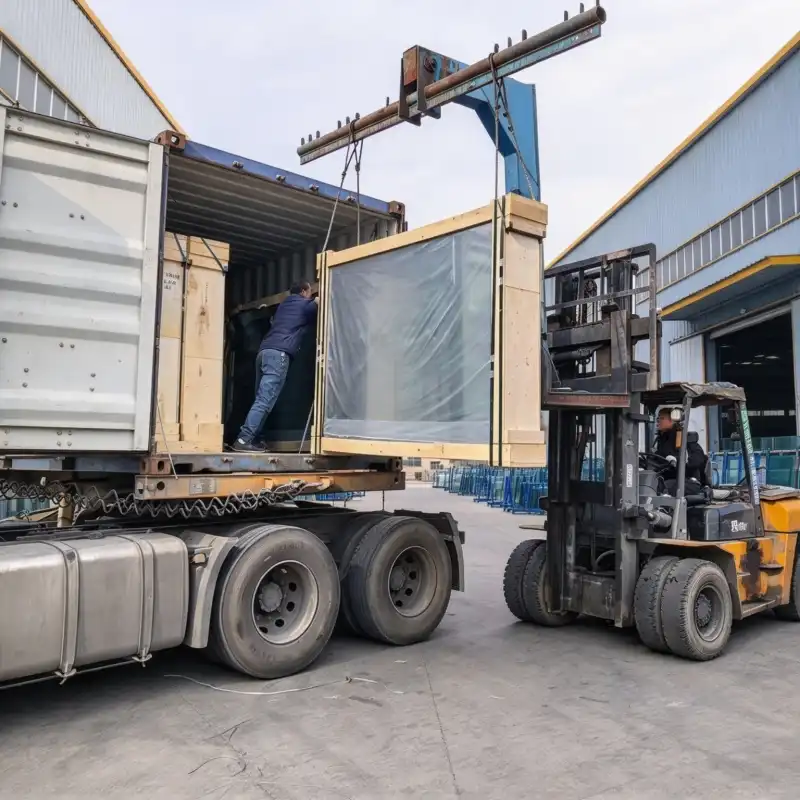
Glass packaging is designed according to the product type, glass dimensions, weight, transportation method, and destination.
For export shipments, glass is normally secured in suitable transport crates or cases with protective materials to reduce movement, impact, scratching, and other transportation risks.
For large or heavy glass units, packaging and loading arrangements are planned according to the actual dimensions and weight of the shipment.
Before shipment, the packing condition and loading arrangement are checked to help ensure that the glass is properly secured during transportation.
For long-distance sea shipments, we also recommend confirming the packaging and loading requirements according to the destination port and transportation conditions.
Yes. Sample production can be discussed for many customized glass products.
For project orders, samples can be used to confirm important aspects such as appearance, color, glass configuration, thickness, processing details, and overall workmanship before mass production.
If the project requires laboratory testing or third-party certification, the required test method and acceptance criteria should be confirmed before sample production.
Once the sample and technical specifications are approved, the approved configuration can be used as the reference for subsequent bulk production.
Yes. We can review the project requirements and recommend a suitable glass configuration based on the intended application.
Customers do not necessarily need to determine the complete glass structure before contacting us. You can provide the application, glass dimensions, required performance, local climate, building or product requirements, and any available drawings or specifications.
Based on these requirements, we can evaluate suitable options such as vacuum glass, insulated glass, laminated glass, tempered glass, or combinations of different glass types.
For example, if the priority is thermal insulation with limited glazing thickness, vacuum glass may be worth evaluating. If the project requires thermal insulation together with solar control or acoustic performance, an appropriate insulated glass configuration may be considered. Where safety or security is a key requirement, laminated or specially designed glass constructions may be more appropriate.
The final specification should always be determined according to the applicable project standards, system requirements, testing requirements, and actual installation conditions.
Send the dimensions, quantity, application and destination for a project review.